
Fire & Smoke Damage Claims
Fire and smoke damage can devastate a property in minutes—yet the destruction they leave behind can take months or even years to properly repair. At Aviva Insurance Adjusters, Inc., we specialize in handling complex fire and smoke claims, ensuring every trace of damage is fully documented, properly included, and compensated under your policy.
Even small fires produce massive amounts of smoke and soot that infiltrate your entire home, leaving residue behind walls, ceilings, ductwork, insulation, and electrical systems. Insurance companies often underestimate these costs unless the claim is handled professionally.
Let our experts document and manage your fire or smoke claim from start to finish.
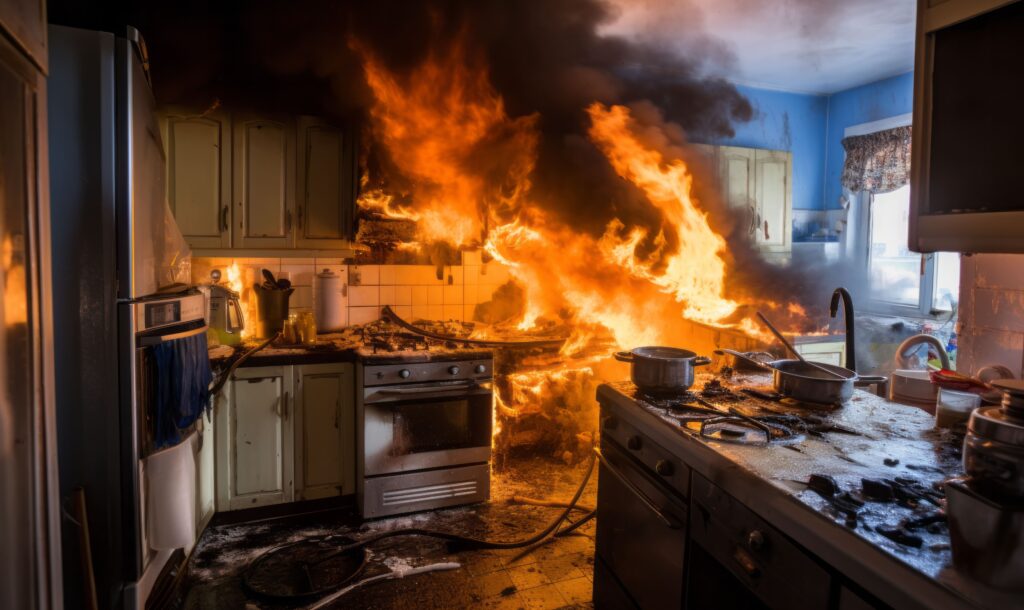
Have You Experienced Fire or Smoke Damage?
Fire claims are among the most heavily disputed types of insurance claims due to their high repair costs. Even a small “contained” fire—like a stove fire or electrical short—can cause:
- Structural charring
- Smoke contamination throughout the home
- Toxic soot infiltration
- HVAC contamination
- Electrical damage
- Water damage from extinguishing efforts
Insurance companies frequently attempt to minimize the scope of repairs by ignoring hidden smoke migration, electrical issues, or collateral damages.
Before accepting any offer, have us review your claim at no cost.
Why Fire & Smoke Damage Is So Extensive
Fire doesn’t just burn what it touches. The more destructive part is often the smoke and soot, which spread far beyond the burn zone.
At Aviva, we routinely handle claims involving:
- Kitchen fires
- Electrical panel and wiring fires
- HVAC motor failures
- Grease fires
- Bedroom or garage fires
- Dryer vent fires
- Lightning-related house fires
- Wildfire smoke intrusion
Smoke can travel dozens of feet through:
- Air ducts
- Wall cavities
- Ceiling joists
- Insulation
- Attic spaces
What looks like a small fire is often a whole-home contamination event.
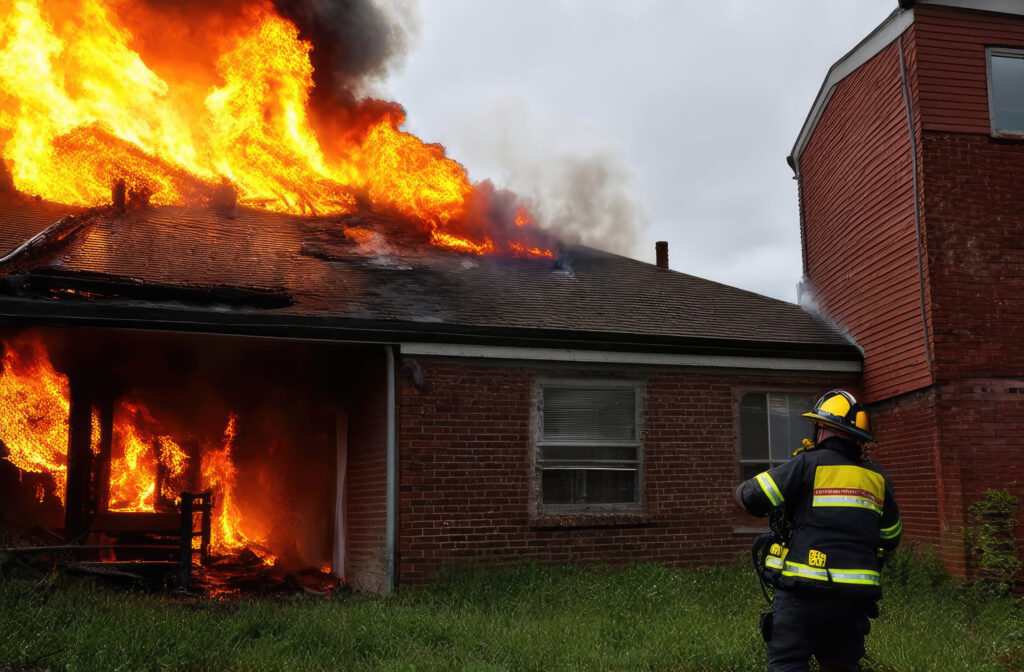
Collateral Fire & Smoke Damage — What Does It Mean?
“Collateral” or “incidental” damage refers to the destruction caused indirectly by the fire or the necessary repairs to access affected areas.
These are covered damages, but insurers frequently try to exclude them.
Common Examples of Fire & Smoke Collateral Damage
Example 1: Cabinet & Drywall Removal
A small stove fire may only scorch the cabinet face—but smoke and soot behind the cabinets require full removal and replacement of the drywall, insulation, and adjacent cabinets.
Example 2: HVAC Soot Contamination
Soot travels into vents and through the entire HVAC system, requiring:
- Duct cleaning
- Coil cleaning
- Blower motor cleaning or replacement
- Full deodorization
Insurers rarely include this unless properly argued.
Example 3: Firefighter Water Damage
The water and foam used to extinguish the fire often cause:
- Soaked flooring
- Wet drywall
- Structural swelling
- Mold risk within 48 hours
This water damage is also part of the fire claim.
Why You Shouldn’t Rely on the Insurance Company’s Adjuster
Insurance companies aim to minimize payouts, especially for expensive losses like fire.
A public adjuster ensures:
- All smoke migration is documented
- Soot testing and lab swabs are performed
- HVAC contamination is included
- Collateral demolition is covered
- Electrical systems are inspected
- Odor remediation is not skipped
- Reconstruction matches code and original materials
Without representation, homeowners often receive settlements 50–70% lower than what they truly need.
Get a FREE Fire & Smoke Inspection & Consultation
A fire can be traumatic—let us take the burden of the insurance claim off your shoulders.
We provide:
- Full smoke & soot assessment
- HVAC contamination analysis
- Structural and electrical evaluation
- Policy review for hidden benefits or limits
- Complete claim preparation and negotiation
Call us now — 877-351-1933
We’re ready to discuss your claim immediately.
Claim Your Insurance
Fire damage spreads fast. Insurance companies respond slowly.
Let us protect your rights as a policyholder.
Signs of Hidden Fire or Smoke Damage
Many homeowners don’t realize the full extent of smoke infiltration. Look for:
- Black dust or residue on vents
- Persistent odor despite cleaning
- Gray or yellow staining on ceilings
- Dust that reappears after cleaning
- Soot behind outlet covers
- Discoloration around light switches
- Smoky smell in HVAC system
These all indicate whole-home contamination.
Frequently Asked Questions About
Fire Damage Claims
Does homeowners insurance cover fire damage?
Yes—fire is one of the primary covered perils.
Does smoke damage count as fire damage?
Yes. Smoke, soot, and odor must be professionally treated.
Is firefighter water damage covered?
Absolutely—it’s part of the fire claim.
Do I need to keep damaged items?
Yes. Do not throw anything away until documented.
How long do fire claims take?
Large claims take longer due to inspections, estimates, and negotiations.
Do I need a public adjuster?
Fire claims are complex and expensive—representation is strongly recommended.