Claims guide
What to know about filing a smoke damage claim
Key takeaways
- Look beyond the visible. Smoke residue and odor can reach areas of a home that show no obvious marks.
- Read your policy. Dwelling, personal property and additional living expense coverage are separate parts of a policy.
- Document first. Photos, video and an inventory taken before cleanup give your claim a clear record.
- Know your options. A licensed public adjuster represents the policyholder, not the insurance company.
A house fire leaves more behind than what the flames touched. Smoke travels well beyond the source, and its effects are often harder to see and to measure. Understanding how smoke damage is assessed can make the claim process feel more manageable.
What smoke damage can involve
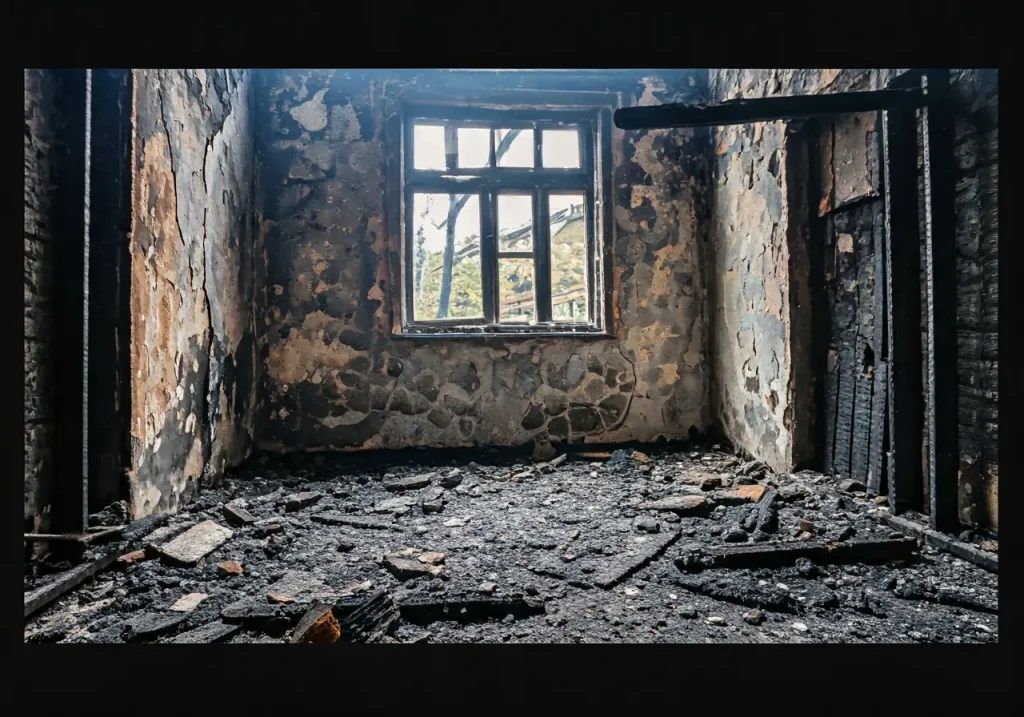
Smoke is a mixture of soot, gases and fine particles, and it settles on and into many surfaces. Walls and ceilings may discolor, metal can corrode from acidic residue, and odor can work its way into carpet, drapes and upholstery. Electronics and appliances can also be affected by residue that is not visible from the outside.
Because the damage is often spread through the home, a room that looks untouched may still need attention. Smoke can also reach attics, closets and the air handling system. These are the places worth examining closely.
How your policy may respond
In many standard homeowner policies, smoke damage from a covered fire falls under the fire peril. Details differ from one policy to the next, so the wording of your own policy is what matters. It helps to understand how the main sections are organized:
- Dwelling coverage relates to the structure of the home.
- Personal property coverage relates to belongings such as furniture, clothing and electronics.
- Additional living expense (ALE) coverage may help with temporary housing costs if the home is not livable.
Look also for exclusions, deductibles and coverage limits. If anything in the language is unclear, your insurance agent or a licensed professional can help you read it.
Documenting before cleanup
A clear record is one of the most useful things a policyholder can build. Take photos and video of every affected area, including the less obvious ones like attics, closets and the contents of cabinets. Capture wide shots for context and close-ups for detail.
Then begin a written inventory of damaged belongings. Where you can, note the item, its approximate age and where it was purchased. Keep receipts, prior repair records and any estimates in a single folder, digital or paper.
If temporary steps are needed for safety, such as boarding up or removing standing water, document the condition first and keep the receipts. Avoid discarding damaged items until they have been recorded and, where appropriate, discussed with your insurer.
Reporting the loss and the inspection
Report the loss to your insurance company as soon as it is safe to do so. Florida law and individual policies both set requirements for giving notice of a property claim, so check your policy and act promptly. An adjuster employed by the insurer will usually be assigned to evaluate the damage.
It is wise to be present during the inspection and to have your documentation ready. Point out areas you are concerned about, and ask questions if something is unclear. Keep notes of who you spoke with and when.
Some policyholders also choose to work with a public adjuster. A public adjuster is licensed by the state and represents the policyholder rather than the insurance company. The role typically involves reviewing the policy, helping document the loss and communicating with the insurer. Fees and services vary, so ask for a clear written contract before agreeing to anything.
Speak with Aviva
If you are dealing with smoke damage in Pasco, Pinellas, Hillsborough or Hernando County, our team at Aviva Insurance Adjusters can talk through your situation and explain your options. Call 1-877-351-1933 or visit avivapa.com to schedule a free consultation.
This article is for general educational purposes only and is not legal advice. Every policy and claim is different. Aviva Insurance Adjusters, Corp. is a licensed Florida public adjusting firm (Lic. W869253) and is not affiliated with Aviva plc or any insurance company.