
Fallen Tree Damage Claims
A fallen tree can cause catastrophic damage to your home, roof, fencing, pool enclosure, windows, and even interior structures. When a tree strikes your property, insurance companies are obligated to pay for all resulting structural and material damages—but they often downplay or misrepresent the true scope of destruction.
At Aviva Insurance Adjusters, Inc., we specialize in documenting tree-impact damage and ensuring the insurance company covers everything from structural shifts to roof decking replacement.
Let us evaluate the full impact of the tree strike.
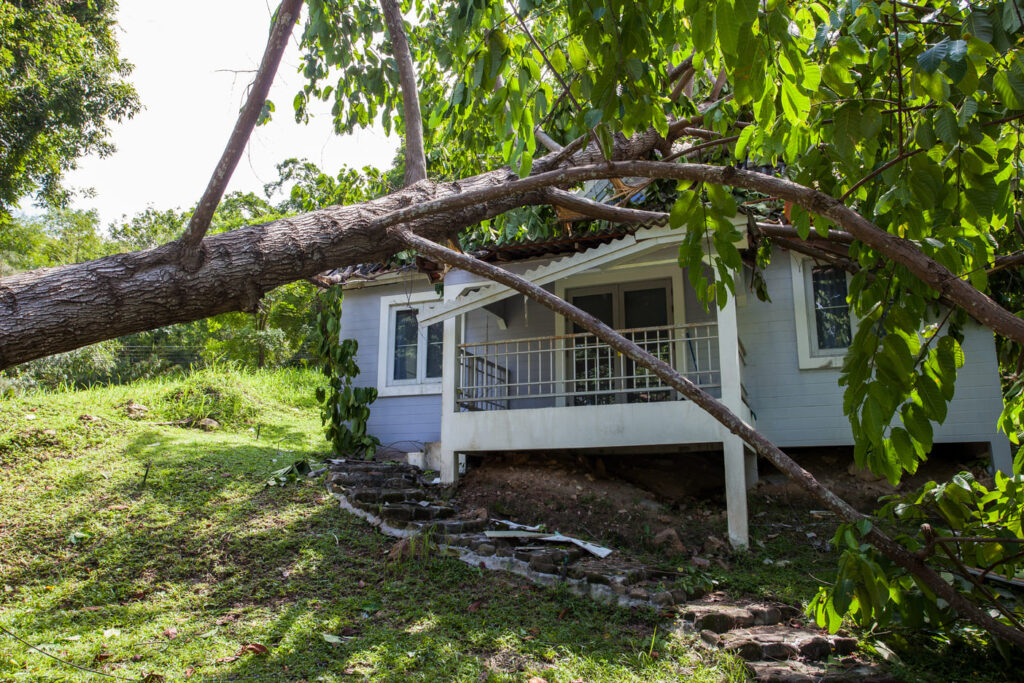
Has a Tree Fallen on Your Home or Property?
A fallen tree can cause damage such as:
- Broken roof structures
- Damaged shingles or tiles
- Cracked roof decking
- Broken rafters and trusses
- Damaged gutters and fascia
- Smashed windows or screens
- Crushed patios or pool cages
- Fence damage
- Interior water intrusion
- Ceiling collapse
Many homeowners only notice what is visible from the ground.Hidden structural damage is almost always more extensive.Before making repairs, let us inspect and document everything.
Why Fallen Tree Damage Is So Extensive
Trees weigh hundreds to thousands of pounds. When they strike a home, the force can:
- Shift roof framing
- Crack trusses
- Damage ridge beams
- Break soffits and fascia
Create roof openings that allow water intrusion
Download debris into the attic
Cause drywall cracks throughout the home
Insurance companies often overlook these hidden damages without a thorough inspection.
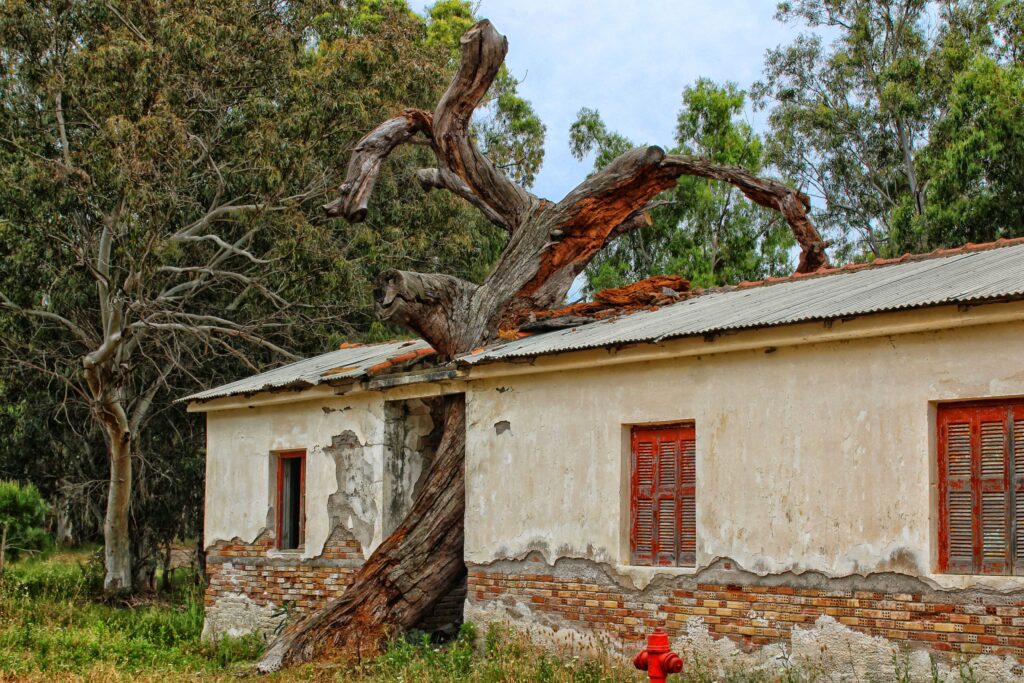
Collateral Fallen Tree Damage — What Does It Mean?
Tree impacts rarely cause isolated damage. Secondary impacts are usually more extensive.
Examples of Collateral Tree Damage
Example 1: Roof Decking Replacement
Even if only one area is pierced, the entire surrounding decking may be splintered or weakened.
Example 2: Attic Structural Shift
A tree impact may cause:
- Twisted rafters
- Split beams
- Loose structural fasteners
These must be repaired or replaced.
Example 3: Water Intrusion
Once the roof is compromised, water enters the attic and:
- Soaks insulation
- Damages drywall
- Promotes mold growth
- Saturates electrical components
All must be included in the claim.
Why You Shouldn’t Rely Only on the Insurance Company’s Adjuster
Tree impact claims are frequently underpaid because insurers:
- Minimize structural damage
- Ignore framing shifts
- Pay only for patching instead of full replacement
- Blame damage on age rather than impact
- Overlook moisture intrusion
A public adjuster ensures:
- Structural engineers inspect when necessary
- Attic and roof systems are fully evaluated
- All debris removal is included
- Interior damages are documented
- Matching materials & code requirements are enforced
- The insurer pays for full restoration
Get a FREE Fallen Tree Damage Inspection & Consultation
We provide:
- Structural assessment
- Attic inspection
- Moisture mapping
- Roof system documentation
- Claim preparation and negotiation
- Policy interpretation
Call us now — 877-351-1933
We’re ready to discuss your claim immediately.
Claim Your Insurance
Tree impacts are traumatic. Let us handle the claim and protect your home.
Signs of Hidden Tree Damage
- Cracks in ceiling drywall
- Misaligned doors or windows
- Visible bowing in roofline
- New roof leaks after impact
- Attic insulation soaked or displaced
- Loose or displaced shingles
- Sagging soffits or fascia
Frequently Asked Questions About
Fallen Tree Damage Claims
Is tree damage covered?
Yes—if a tree hits a structure.
Is tree removal covered?
Only when the tree hits a covered structure.
Can my neighbor’s tree be covered?
Yes—your policy covers YOUR home regardless of ownership.
Is structural damage always included?
If caused by the tree impact, yes.
Should I remove the tree before inspection?
No. Document everything first.